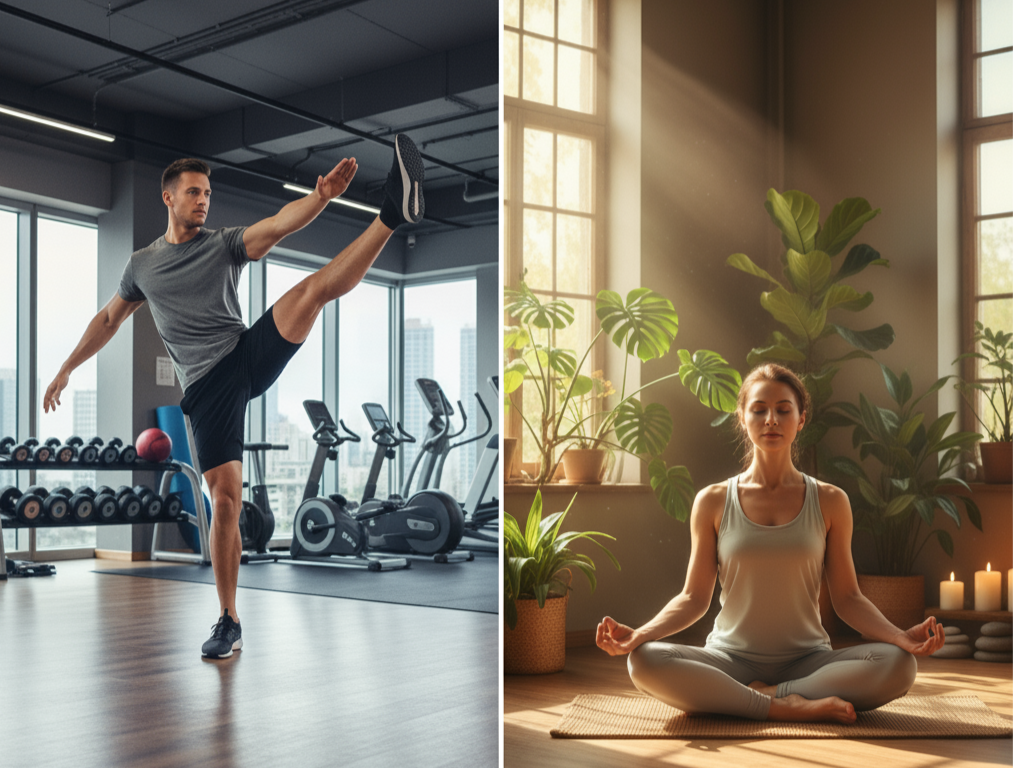
Stretching and yoga both improve flexibility, but they’re not the same. While both practices help your body move better and feel more balanced, each one serves a unique purpose depending on your goals.
Whether you’re looking for a quick flexibility boost or a more holistic mind-body routine, understanding stretching vs. yoga can help you decide which is right for you.
What Is Stretching?
Stretching focuses on improving the flexibility and mobility of your muscles and joints. It’s often used as a warm-up or cool-down before and after workouts, or simply as a daily routine to keep your body feeling loose and pain-free.
There are different types of stretching, including:
- Static stretching: Holding a position for 15–60 seconds to lengthen muscles and increase range of motion.
- Dynamic stretching: Moving through controlled motions (like leg swings or arm circles) to prepare the body for activity.
- PNF stretching (Proprioceptive Neuromuscular Facilitation): A more advanced technique that combines stretching and contracting muscles for deeper flexibility gains.
Stretching is a simple, effective way to target tight areas, improve posture, and prevent injuries, making it one of the most accessible flexibility exercises available.
What Is Yoga?
Yoga is a centuries-old practice that combines physical postures, breathing techniques, and mindfulness. While yoga does improve flexibility, its benefits go beyond the physical. It’s designed to connect the body and mind, promoting relaxation, balance, and inner focus.
Different styles of yoga cater to different needs:
- Hatha yoga focuses on basic poses and gentle stretching—great for beginners.
- Vinyasa yoga links breath to movement with flowing sequences.
- Yin yoga targets deep connective tissues with long-held stretches for improved mobility and relaxation.
- Power yoga builds strength, endurance, and flexibility through more dynamic movements.
Yoga not only increases flexibility but also enhances strength, coordination, and mental well-being. It’s often considered one of the best yoga alternatives for those looking to combine fitness with mindfulness.
Key Differences Between Stretching and Yoga
So, when comparing stretching vs. yoga, what really sets them apart?
- Purpose:
- Stretching focuses purely on physical flexibility and muscle function.
- Yoga aims to balance the mind, body, and spirit through movement and breath.
- Structure:
- Stretching routines usually target specific muscle groups.
- Yoga follows sequences of poses (asanas) that work multiple areas at once.
- Breathing:
- While breathing is important in stretching, it’s not the central focus.
- In yoga, breath control (pranayama) is an integral part of the practice.
- Mental Component:
- Stretching helps release tension in muscles.
- Yoga adds a meditative element that promotes relaxation and mindfulness.
- Intensity and Duration:
- Stretching can take as little as five minutes.
- A full yoga session usually lasts 45–90 minutes, offering a more comprehensive experience.
Which Is Best for Your Goals?
If your goal is to improve flexibility, either option will help—but the best choice depends on your needs.
- Choose stretching if you want quick, targeted relief from muscle tightness or to enhance athletic performance. It’s great for runners, gym-goers, and anyone who sits for long hours.
- Choose yoga if you’re seeking a full-body workout that includes flexibility, strength, balance, and mental clarity.
You can also combine both practices! Many athletes and fitness enthusiasts start with stretching and later incorporate yoga for deeper flexibility and stress management.
The Takeaway
When it comes to stretching vs. yoga, there’s no “one-size-fits-all” answer. Both are valuable flexibility exercises that can complement your health and wellness goals.
If you’re looking for simple, effective yoga alternatives, guided stretching sessions can help you gain flexibility, reduce pain, and feel more energized—without needing to master complex poses.
At Stretch AI, we believe in making flexibility training smarter and more personalized. Whether you prefer structured stretching programs or yoga-inspired movement, our intelligent tools help you move better and recover faster—so you can feel your best, every day.